


Written by Guills Henry
Guills Henry is an independent editorial author specialising in freight forwarding to Papua New Guinea, with focus on operational logistics, customs compliance, and Australia–PNG trade routes.
Freight forwarding between Australia and Papua New Guinea operates within a trade corridor defined by proximity and complexity. Although geographically close, the two countries are connected by logistics systems that function under markedly different conditions from those found in larger or more standard international markets.
Cargo movement across this corridor is influenced by infrastructure limitations, regulatory interpretation, transport capacity, and regional accessibility within Papua New Guinea. These factors shape how freight is planned, routed, and delivered, and they explain why outcomes can vary significantly even between shipments that appear similar on paper.
The Australia–Papua New Guinea Trade Environment
Papua New Guinea occupies a distinctive position within Australia’s Pacific trade network. Proximity across the Torres Strait has produced a long-standing flow of goods that supports public infrastructure, resource extraction, healthcare delivery, and everyday consumption across PNG’s urban and regional centres. Cargo moving along this corridor commonly includes construction materials for civil works, heavy machinery for mining and energy projects, medical equipment for hospitals and clinics, packaged food products, and a wide range of consumer goods entering domestic supply chains.
Trade volumes are most visible at primary gateways such as Port Moresby and Lae, which function as administrative and industrial entry points respectively. However, these ports represent only the first stage of distribution. A significant proportion of imported cargo is transhipped onward to secondary ports, provincial towns, and inland destinations where road, coastal shipping, or air transport becomes the dominant mode of movement.
This structural reality shapes how freight forwarders PNG must approach shipment planning. Decisions cannot be limited to vessel schedules or air freight capacity between Australia and PNG. The effectiveness of a shipment is determined just as much by downstream factors: cargo handling capability at arrival ports, availability of inland transport, weather exposure, and local infrastructure constraints.
In practice, freight movement within Papua New Guinea is influenced by geography as much as regulation. Mountainous terrain, limited sealed road networks, and reliance on coastal or air-based distribution mean that transit performance varies widely by destination. A shipment cleared efficiently at the wharf may still face delays if inland routes are disrupted, equipment is unavailable, or regional handling capacity is constrained.
Understanding the Australia–Papua New Guinea trade environment therefore requires viewing freight forwarding as a connected system rather than a linear journey. International transport, port operations, customs clearance, and inland logistics form an interdependent chain, where weakness at any point affects the entire outcome.
Freight Forwarding as an Operational Function
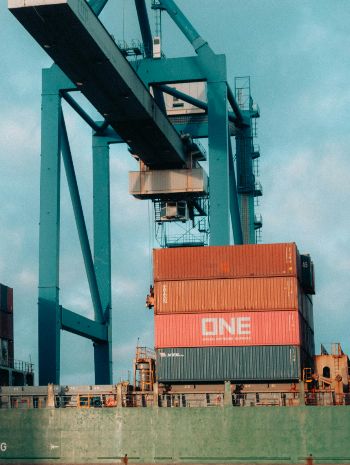 Within the Australia–Papua New Guinea trade corridor, freight forwarding functions less as a transactional service and more as a continuous operational discipline. The task is not limited to arranging vessel space or securing an air waybill, but to structuring a logistics pathway that aligns cargo characteristics, transport modes, regulatory obligations, and physical infrastructure into a sequence that can realistically be executed.
Each shipment introduces its own variables. Cargo type influences handling requirements; dimensions and weight affect mode selection; destination determines inland routing options. These variables must be assessed against the practical realities of PNG’s ports, airports, and transport networks, where capacity is finite and conditions change with little notice.
Freight forwarders working in this environment routinely operate within a constrained framework shaped by multiple, interdependent factors:
Shipping frequency on Australia–PNG sea routes is limited, particularly outside primary ports, requiring forward planning and tolerance for schedule variability.
Air cargo capacity is influenced by aircraft type, passenger demand, and payload limits, making space allocation and weight management critical.
Port handling capability varies significantly between locations, with equipment availability, labour conditions, and congestion affecting discharge and clearance timelines.
Customs enforcement practices may differ in application, placing greater emphasis on document accuracy, valuation consistency, and pre-arrival preparation.
Inland transport availability is constrained by road conditions, weather exposure, security considerations, and reliance on coastal or air-based distribution for remote destinations.
Because these elements do not operate independently, freight forwarding in the Australia–PNG corridor becomes an exercise in decision sequencing. A choice made at the international transport stage can introduce downstream limitations if inland movement or handling capacity is not simultaneously considered. Conversely, understanding inland constraints early can inform more realistic routing, packaging, and timing decisions.
Standardised logistics models often fail in this context. Instead, freight forwarding operates as a process of adaptation—balancing regulatory compliance, physical access, and operational risk to move cargo through a system that rewards foresight and penalises assumption.
Air Freight Between Australia and Papua New Guinea
Air freight plays a critical role in Papua New Guinea trade where timing, cargo value, or urgency outweigh cost considerations. Medical equipment, critical spare parts, perishable goods, and high-value commercial cargo often rely on air transport to ensure continuity of operations.
However, air freight to PNG is constrained by aircraft availability, payload limits, and routing options. These constraints require careful planning around consolidation, scheduling, and contingency arrangements. Air freight is most effective when applied selectively and with full awareness of its limitations within the PNG context.
Sea Freight and Maritime Transport
Sea freight carries the majority of cargo volume between Australia and Papua New Guinea. Containerised shipments, breakbulk cargo, and project cargo move through a small number of ports with varying levels of infrastructure and handling capability.
Vessel schedules, port congestion, equipment availability, and discharge efficiency directly affect transit times. Sea freight planning therefore requires coordination between cargo preparation, documentation accuracy, and realistic scheduling based on port conditions rather than nominal transit durations.
Customs Clearance and Regulatory Conditions
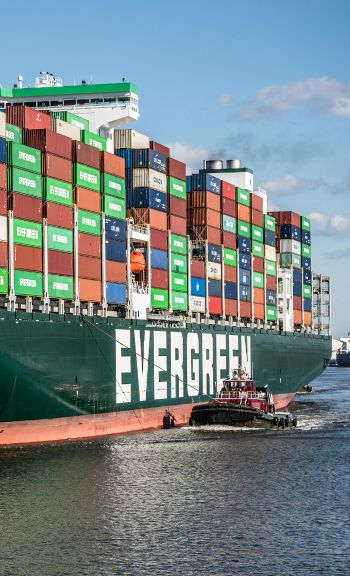 Customs clearance remains one of the most influential stages in PNG-bound freight movements. Papua New Guinea’s import controls require precise documentation, accurate classification, and adherence to regulatory procedures.
Delays frequently originate from administrative misalignment rather than transport failure. Inaccurate declarations, incomplete documentation, or misunderstanding of import requirements can halt cargo regardless of how efficiently it has moved internationally. Freight forwarding within this corridor depends heavily on procedural discipline and regulatory awareness.
Infrastructure and Inland Logistics
Once cargo clears ports or airports, inland distribution introduces additional complexity. Road conditions, terrain, and regional accessibility vary widely across Papua New Guinea. For shipments supporting mining, construction, energy, or regional development projects, inland logistics can represent the most challenging phase of the supply chain.
These downstream constraints influence upstream decisions such as packaging, cargo configuration, routing, and delivery scheduling. Effective freight forwarding anticipates these conditions rather than reacting to them after arrival.
Managing Risk Across the Trade Corridor
Risk is an inherent feature of freight movement between Australia and Papua New Guinea. It does not arise from a single point of failure, but from the interaction of transport systems, regulatory frameworks, infrastructure limits, and environmental conditions that shape how cargo progresses through the corridor. These risks cannot be removed entirely; they can only be anticipated, absorbed, and managed through informed planning.
In this trade environment, disruption is not an exception. Delays, re-sequencing, and contingency routing form part of normal operations, particularly once cargo moves beyond primary ports and airports.
Sources of Operational Risk
Risk across the Australia–Papua New Guinea corridor commonly emerges from several interconnected areas:
Transport variability, including limited vessel frequency, irregular sailing windows, and constrained air cargo capacity
Weather exposure, such as seasonal rainfall, flooding, and cyclonic activity affecting ports, roads, and airstrips
Cargo handling limitations, driven by equipment availability, labour constraints, and uneven terminal capability
Compliance and documentation sensitivity, where minor discrepancies can delay clearance or trigger inspections
Inland coordination gaps, particularly when cargo transitions between sea, road, coastal shipping, or air transport
Each factor on its own may be manageable. Combined, they introduce compounding risk that must be addressed holistically.
Risk Management in Practice
Managing risk in this corridor depends on distinguishing between areas that allow flexibility and those that demand precision.
Areas requiring precision typically include:
Documentation accuracy and regulatory alignment
Cargo classification, packing standards, and labelling
Alignment between declared cargo and physical shipment
Areas requiring flexibility often include:
Transit time expectations
Mode selection for inland movement
Delivery sequencing to secondary ports or remote locations
Attempting to enforce rigid timelines in flexible areas often increases failure rates, while lack of discipline in precision-driven areas creates avoidable delays.
Role of Experience and Situational Awareness
 Effective freight forwarding in this environment relies heavily on accumulated experience and local awareness. Understanding how conditions shift—whether due to weather patterns, port congestion, or inland access—allows operators to adjust routing and sequencing before disruption becomes visible.
Nominal transit speed is rarely the primary determinant of success. Reliability is shaped by the ability to recognise risk early, adjust expectations, and maintain continuity across each stage of the logistics chain.
In the Australia–Papua New Guinea corridor, risk management is less about avoiding disruption and more about maintaining control when disruption occurs.
Freight Forwarders PNG in Practice
The role of freight forwarders PNG within this trade corridor is shaped by these operational conditions. Success depends on aligning transport modes, regulatory processes, and infrastructure realities into a coherent logistics approach that reflects how the system actually functions.
Understanding freight forwarding between Australia and Papua New Guinea therefore requires attention to context, constraints, and execution — not just routes and rates.


